Last updated November 22, 2026
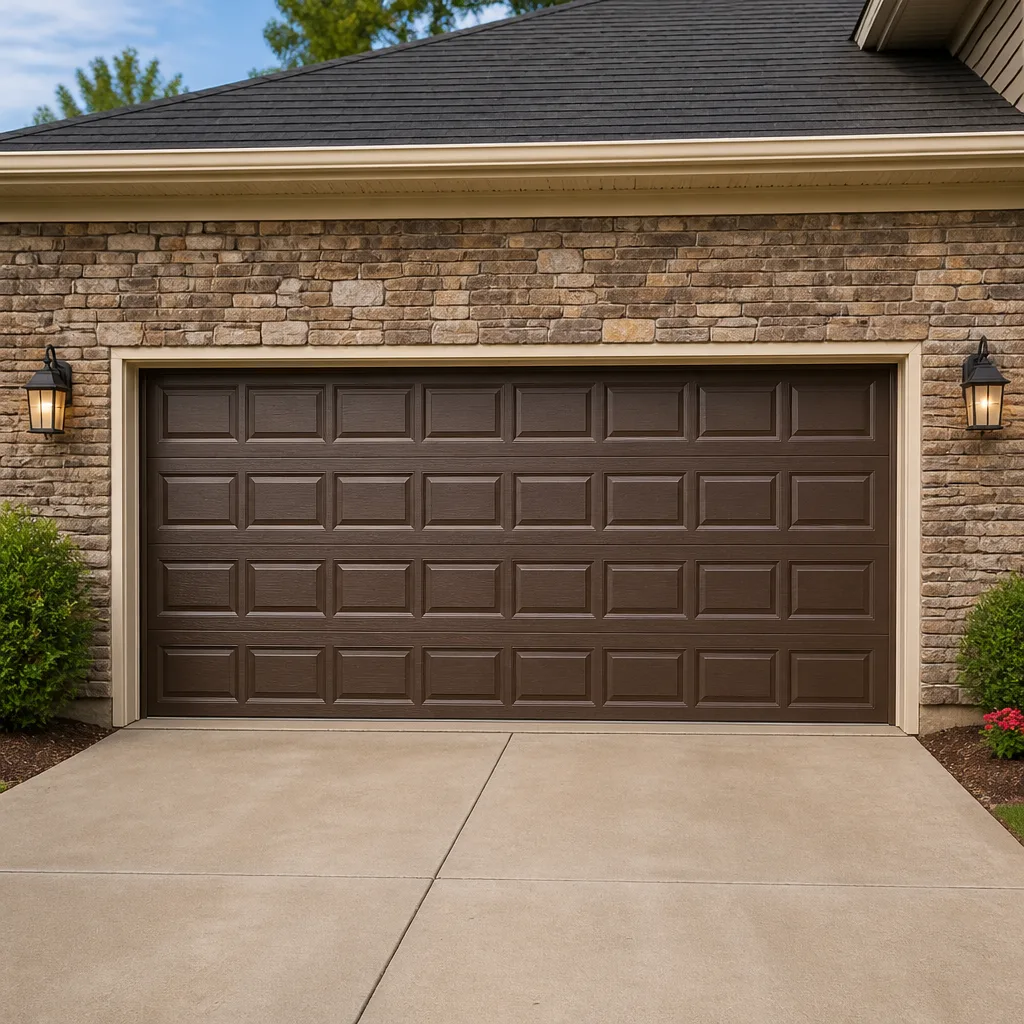 Raised-panel steel
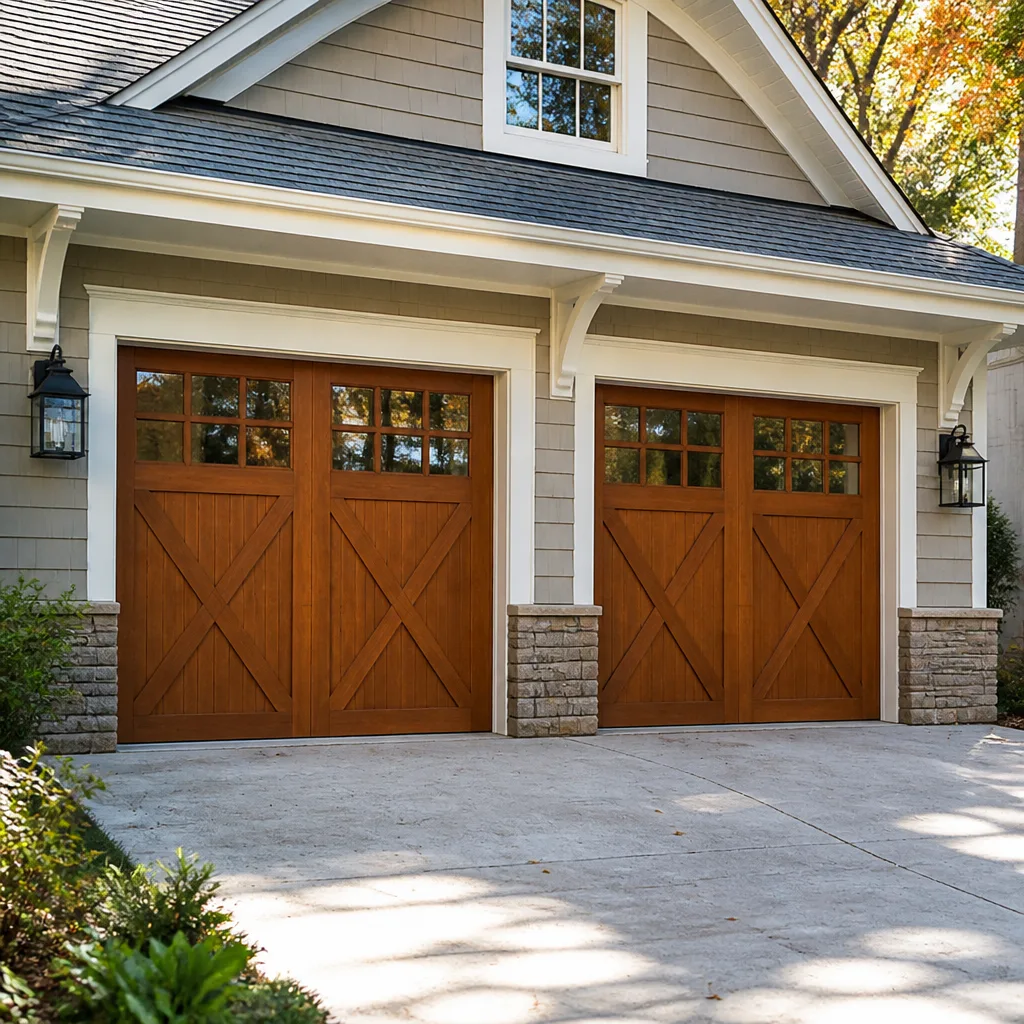 Carriage house
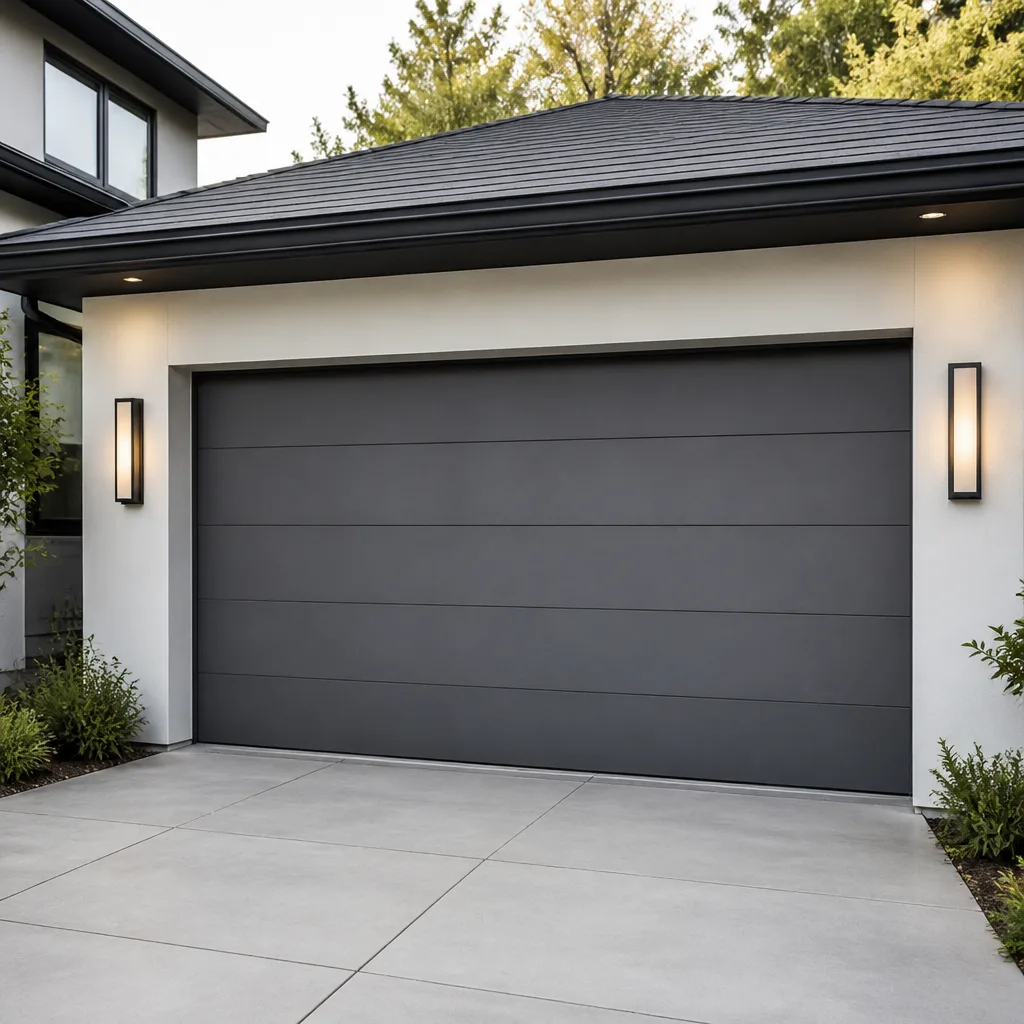 Modern flush
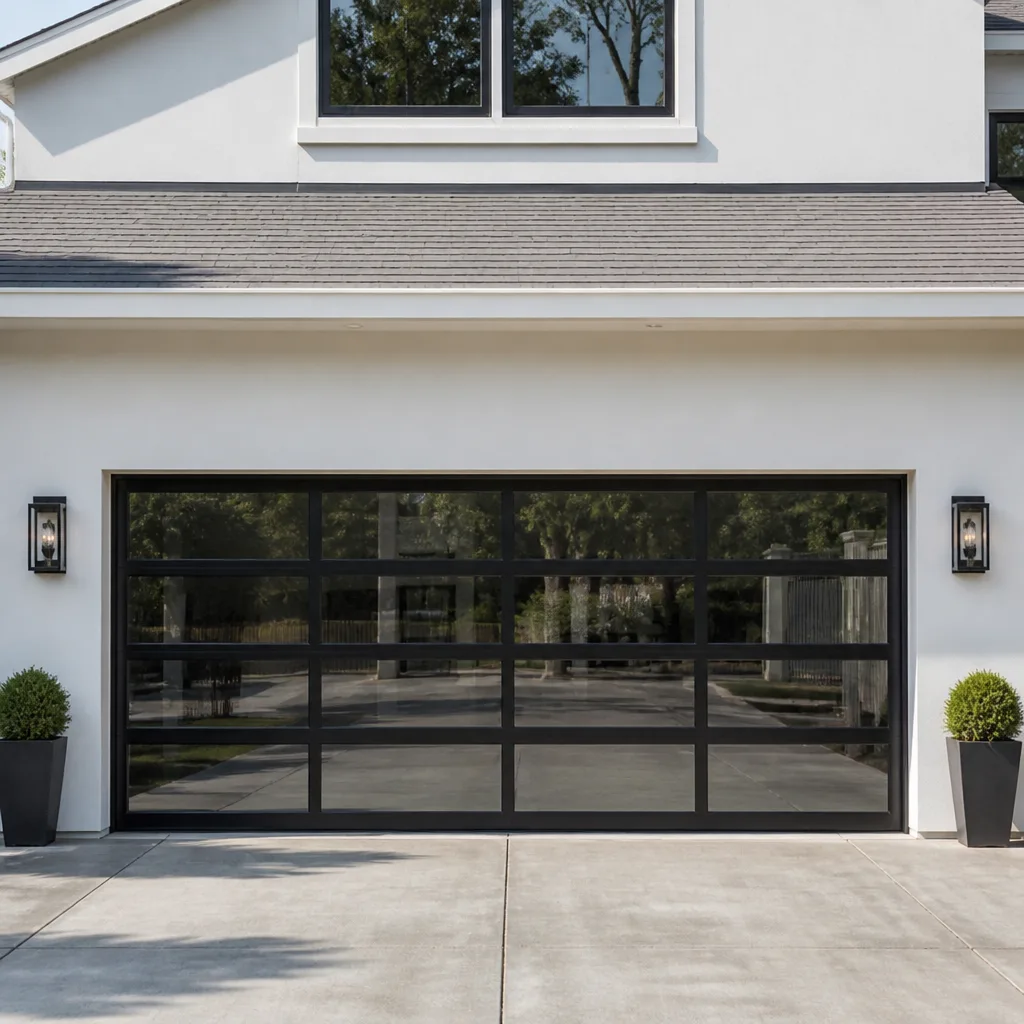 Full-view glass
 LiftMaster openers
 Chamberlain openers
Full 25-point door and opener safety check with every visit - springs, cables, rollers, tracks, and your LiftMaster or Chamberlain opener included
You get a price before we start. It does not change when the pro arrives.
Get your free estimateGarage Door Warning Signs: A Green Run Homeowner’s Reference Guide
A door that reverses before it reaches the floor is telling you one of four different things, and only one of them is an emergency. That’s the part most homeowners get wrong. They see a symptom, assume the worst, and either panic or ignore it for another six months. In reality, a jerky door, a grinding noise, or a sluggish start can each trace back to several causes with very different urgency levels. This guide maps the twelve most common garage door symptoms in Green Run to their likely causes, so you can tell the difference between “adjust this yourself this afternoon” and “stop using the door and call someone today.”
Quick Answer
Most garage door warning signs fall into one of three urgency tiers: cosmetic or adjustable issues you can watch for a few weeks, performance problems that should be scheduled for service soon, and imminent-failure signs that mean stop using the door immediately. In Green Run’s humid summers, many symptoms that look like mechanical wear – swollen sections, fogged safety sensors, binding tracks – are actually moisture-related and resolve with different fixes than a failing spring or worn rollers would need. The key is matching the symptom to the cause before you decide what to do.
Styles & brands we work with
- Raised-panel steel
- Carriage house
- Modern flush
- Full-view glass
- LiftMaster openers
- Chamberlain openers
Table of Contents
- The Symptom-to-Cause Matrix: 12 Observable Problems
- Urgency Tiers: What’s an Emergency vs. What Can Wait
- The Reversing Door: Four Causes, One Emergency
- Opener Problem or Door Problem? The 30-Second Emergency Cord Test
- Green Run Humidity: Symptoms That Mimic Mechanical Wear
- Diagnosing Noises: Grinding, Squealing, Popping, and Rumbling
- Hidden Liability: Sagging Doors, Misaligned Tracks, and CO Gaps
- A Seasonal Walk-Around Checklist for Green Run Homeowners
The Symptom-to-Cause Matrix: 12 Observable Problems
The most useful way to read a garage door is to treat each symptom as a question, not an answer. The same jerky movement can mean a dirty track, a binding roller, or a torsion spring that’s lost tension. Here are the twelve most common observable problems we see, grouped by what they tell you.
Sound Symptoms
- Grinding or scraping: Usually rollers that have worn flat or a track that’s out of alignment. Low urgency if the door still travels smoothly, but gets worse fast.
- Squealing: Dry hinges, rollers, or a torsion tube that needs lubrication. Easy to address, often a sign of neglected maintenance.
- Popping or snapping: A torsion spring that has partially failed or a cable that’s slipping. Treat as imminent failure and stop using the door.
- Rumbling or banging: Loose mounting bolts or a worn opener gear. Can often be scheduled, but check the opener before assuming it’s just the door.
Movement Symptoms
- Jerky or uneven travel: Dirty track, binding roller, or a spring that’s nearing the end of its cycle count. Different urgency depending on which one it is.
- Door reverses before hitting the floor: Safety sensor obstruction, misaligned limit switch, worn spring, or a floor obstruction. Only the spring failure is urgent.
- Door won’t move at all: Opener problem vs. door problem – see the emergency cord test below.
Alignment and Response Symptoms
- Visible gap on one side: Track out of plumb or a bent roller. Can lead to premature seal wear and a CO ingress risk in attached garages.
- Slow response to the remote: Weak battery, failing opener logic board, or interference. Rarely dangerous, but annoying to live with.
- Door stops partway up: Limit switch out of adjustment, binding track, or a failing opener motor that’s hitting thermal cutoff.
Visual Wear Indicators
- Frayed or kinked cable: Imminent failure. A cable can snap and cause injury or drop the door.
- Visible spring gap or rust bleed: Spring is compromised. Stop using the door until it’s assessed.
If any of these sound familiar, our Garage Door Repair Green Run team can walk through what you’re seeing over the phone before you schedule anything. It’s a quick way to sort out what’s actually urgent.
Urgency Tiers: What’s an Emergency vs. What Can Wait
Not every warning sign deserves a same-day call. Here’s how we sort them, and it’s the same sorting we’d walk you through over the phone.
Tier 1: Stop Using the Door Immediately
- A broken spring strand (you’ll often see a clean vertical gap in the coil, or hear a loud pop)
- A frayed, kinked, or visibly slack cable
- A door that falls faster than normal, or slams rather than lowering smoothly
- Opener motor that trips thermal cutoff repeatedly (the motor shuts off after a short run, then works again after cooling – a sign the motor is strained by a door problem)
These are the signs where the door can fail catastrophically, and the failure mode can be injury or a door that drops. High-tension springs and cables are not a DIY repair – they hold enough stored energy to cause serious injury, which is why spring work needs specialized tools and training. Our spring repair is a named, core service for exactly this reason.
Tier 2: Schedule Service Soon
- Visible gap on one side of the door
- Grinding or scraping during travel
- Door stops partway up but resets
- Slow response time to the remote or wall button
- Bottom seal gap or worn weatherstripping
These degrade the door’s performance but rarely fail without warning. They can be scheduled for a normal appointment.
Tier 3: Watch and Adjust
- Squealing hinges that respond to lubrication
- Occasional sensor tripping in humid weather
- A door that’s slightly noisier than usual but travels smoothly
These are usually maintenance items. If they persist after a basic adjustment, that’s when they move to Tier 2.
The Reversing Door: Four Causes, One Emergency
A door that reverses before hitting the floor is the single most misread symptom in a garage. It’s also the one where the cause matters most, because three of the four causes are safe to address at your pace and one is not.
- Safety sensor obstruction. Most likely cause. Something is in the sensor beam path – a leaf, a tool, cobwebs, or condensation on the lens. Clean the sensors and re-test. If the door closes, you’re done.
- Misaligned limit switch. The opener is set to stop before the floor. On most openers this is adjustable, and a small adjustment on the limit screw usually fixes it. The door should close fully and evenly.
- Worn spring. A torsion or extension spring that’s lost tension can’t counterbalance the door properly, and the opener’s safety system reads the extra strain as an obstruction. This is the one that’s actually an emergency – the spring is close to failing completely, and if it does, the door can drop.
- Physical obstruction at the floor. Anything in the door’s path triggers the reversal. Usually obvious, but sometimes a warped bottom seal or debris buildup acts as a false obstruction.
How to tell the difference: if the door reverses and the spring looks perfectly normal (no visible gap, no rust bleed, full coil), you’re almost certainly looking at cause one or two. If the door reverses and the spring looks compromised in any way, treat it as cause three. Our garage door repair team can usually tell over the phone which category you’re in.
For openers, the diagnosis depends on the brand. Older Craftsman and Genie units have specific limit-switch behavior that differs slightly from LiftMaster and Chamberlain models. We work on the brand already in your garage, which matters most when a symptom like this is brand-specific.
Opener Problem or Door Problem? The 30-Second Emergency Cord Test
When the door won’t move at all, the first question is always: is this an opener issue or a door issue? The difference changes which technician you need, what the repair involves, and how urgent it is. There’s a simple test that separates them, and it takes about 30 seconds.
- Locate the emergency release cord. It hangs from the opener trolley, usually a red handle or a T-shaped cord.
- With the door fully closed, pull the cord. This disconnects the door from the opener. The door is now in manual mode.
- Lift the door about halfway by hand. It should move smoothly and stay where you let go, or rise only slightly. If it’s very heavy, hard to lift, or slams back down, the problem is in the door (springs, cables, or tracks).
- If the door moves smoothly by hand but the opener does nothing, the problem is the opener. Common causes include a dead logic board, a stripped drive gear, or a failed capacitor.
The test tells you which half of the system has failed. If the door is heavy, stop lifting and call for service – you don’t want to stress a compromised spring. If the door is light and smooth but the opener is dead, our garage door opener repair covers both the current smart-home-compatible brands (LiftMaster/myQ, Chamberlain) and legacy units (Craftsman, Genie). Bring the model number if you can find it on the opener housing; it helps us match the right logic board or gear kit.
Green Run Humidity: Symptoms That Mimic Mechanical Wear
Green Run sits in a stretch of Virginia where summer humidity is high and the swing between wet and dry seasons is pronounced. That has a real effect on garage doors, and it creates a class of symptoms that look like mechanical wear but resolve with different fixes.
- Swollen door sections. Wood and some composite doors absorb moisture, and the sections can swell enough to bind against the tracks. The door sticks, jerks, and sometimes reverses. The fix is usually adjusting the track spacing and sealing the door, not replacing rollers.
- Condensation on safety sensors. Humid mornings produce fog on the sensor lenses, which the door reads as an obstruction and reverses. This is a seasonal pattern, not a failing sensor – cleaning the lenses resolves it. If it happens every morning year-round, that’s a different problem.
- Rust bleed on springs. Not every rust streak means a failed spring. A small amount of surface rust is cosmetic and can be treated. A visible gap in the coil or heavy rust bleed combined with a door that’s suddenly heavy means the spring has failed.
- Sticking hinges and rollers. High humidity causes lubricants to thin out, and hardware that was quiet in April starts squealing by July. This is maintenance, not failure.
The Green Run twist is that the same set of symptoms – sticking, jerking, reversing – can be caused either by humidity-driven swelling or by a genuinely worn part. The way to tell: humidity symptoms improve in dry weather and return in wet weather. Mechanical wear gets steadily worse regardless of the season. If you’re not sure which you’re dealing with, that’s a good moment to call.
Diagnosing Noises: Grinding, Squealing, Popping, and Rumbling
Sound is the most nuanced warning sign a garage door gives you. The type of noise and where it comes from narrows down the cause substantially.
Grinding
Grinding usually points to a roller that has worn flat on one side and is dragging along the track, or a track that’s out of alignment and rubbing against the door edge. If the grinding is at the start of the travel, suspect the first roller. If it’s throughout the travel, suspect the track alignment. In humid Green Run weather, a track can bow slightly as the door swells, creating a binding point that grinds only during specific months.
Squealing
Squealing is almost always lubrication. Hinges, rollers, and the torsion bar all need periodic lubrication, and the constant humidity here thins out the lubricant faster than in drier climates. A full lubrication with the right product is usually a same-visit fix.
Popping or Snapping
Popping is the sound you need to take seriously. It can mean a torsion spring has partially failed, or a cable has jumped its drum. Either way, stop using the door. Do not try to spray lubricant on the spring or work on the cable yourself. This is the one symptom where the correct response is always “call for service.”
Rumbling or Banging
Rumbling is usually an opener issue – a worn drive gear, a loose mounting bracket, or a motor that’s starting to fail. On belt-drive openers (Chamberlain, LiftMaster, Genie) the drive belt can stretch and rumble. On chain-drive units (Craftsman, older Genie models), a loose chain creates a banging rhythm. Both are usually scheduled repairs, not emergencies.
A quick way to isolate the source: if the noise is clearly coming from the ceiling unit (the opener head), it’s an opener issue. If it’s coming from the door itself or the tracks, it’s a door issue. Our team works on all four opener brands above and both mainstream door brands (Clopay, Amarr), so we can usually tell you the cause over the phone once you describe where the noise comes from.
Hidden Liability: Sagging Doors, Misaligned Tracks, and CO Gaps
Some warning signs are easy to dismiss because nothing is broken yet. They’re the ones worth paying closest attention to, because they’re less about the door failing and more about what the door is protecting you from.
Sagging Doors
A door that sags – one side visibly lower than the other, or the door dipping when it’s halfway up – puts uneven strain on the springs and cables. Over time this forces one side of the door to work harder than the other, which significantly shortens the life of both springs. More urgently, a sagging door means the panels aren’t supporting each other properly, and one panel can fail and drop. This is a Tier 2 issue until it isn’t – if the sag is more than a small amount, treat it as Tier 1.
Misaligned Tracks
Tracks should be parallel, plumb, and evenly spaced from the door edge. Visible bending, a gap that’s wider at one end than the other, or a track that looks out of square are all signs the door isn’t traveling correctly. A misaligned track wears out rollers faster, accelerates the door’s failure, and can cause the door to come off the track entirely – which is a real safety hazard.
Bottom Seal Gaps
This is the quiet one. The bottom seal on an attached-garage door is the barrier between the garage and the outside, and a gap in that seal is a pathway for carbon monoxide from a running engine to enter the house. For attached garages in Green Run, a worn bottom seal, torn weatherstripping, or daylight visible under the closed door is worth fixing for safety reasons alone, before you think about the draft or the pest problem. Any bottom seal repair is a small job compared to a door replacement.
A Seasonal Walk-Around Checklist for Green Run Homeowners
A five-minute inspection each season catches most of the symptoms above while they’re still Tier 3. Here’s what we recommend checking.
- Listen to the door in motion. Any grinding, squealing, or popping that wasn’t there last season.
- Watch the door close completely. Check that it lowers all the way to the floor without reversing.
- Look at the spring. A visible gap in the coil, a rust streak, or a stretching torsion bar are warning signs.
- Inspect the cables on both sides. Fraying, kinking, or slack in the cable means stop.
- Check the safety sensors. Clean the lenses, confirm the indicator lights are solid, and test with a hand in the beam path.
- Look under the closed door. Any daylight visible under the bottom seal is a gap worth addressing.
- Test the opener’s response time. A slow response or a delay in reversing is worth a closer look.
- Check the balance. With the door in manual (emergency cord pulled), lift it halfway – it should stay put. If it drops or lifts easily, the spring balance is off.
If anything on this list raises a question you can’t answer, call us. Our technicians have up to 13 years of experience reading exactly these symptom patterns, and the phone diagnosis costs nothing. Our garage door installation and repair teams both run the same checklist during any visit, whether we’re there for a tune-up or a full replacement.
Common Mistakes to Avoid
- Ignoring a reversing door until it becomes a failing door. The reversing door is usually a sensor or limit-switch issue, but it’s also the first sign of a worn spring. Waiting turns a cheap fix into a spring repair.
- Thinking a lubrication spray is a fix. Lubricant is maintenance, not repair. If the door was squealing because the hinge was dry, lubrication fixes it. If it was squealing because the roller was binding against a misaligned track, the noise comes back – and the track is still bent.
- Adjusting the limit switch on a door with a failing spring. In Green Run’s humid months, it’s easy to assume the reversing door is a sensor or limit issue. If the spring is compromised, adjusting the limit only masks the problem while the door gets closer to failing.
- Trying to tighten or replace a spring or cable yourself. High-tension springs hold enough stored energy to cause serious injury. This is the one repair to always leave to a technician.
- Assuming a noisy door is “just noisy.” Grinding, popping, and rumbling each point to different causes and different urgency levels. A door that rumbles for months can wear out the opener motor before anyone notices.
- Forgetting the bottom seal. Daylight under a closed door isn’t cosmetic – for attached garages it’s a carbon monoxide path. Replacing the seal is inexpensive; the alternatives aren’t.
- Testing the emergency release and forgetting to re-engage it. If you pull the cord for the 30-second test, reconnect it when you’re done. A door left in manual mode won’t respond to the opener and can surprise you when the weather changes.
See the difference
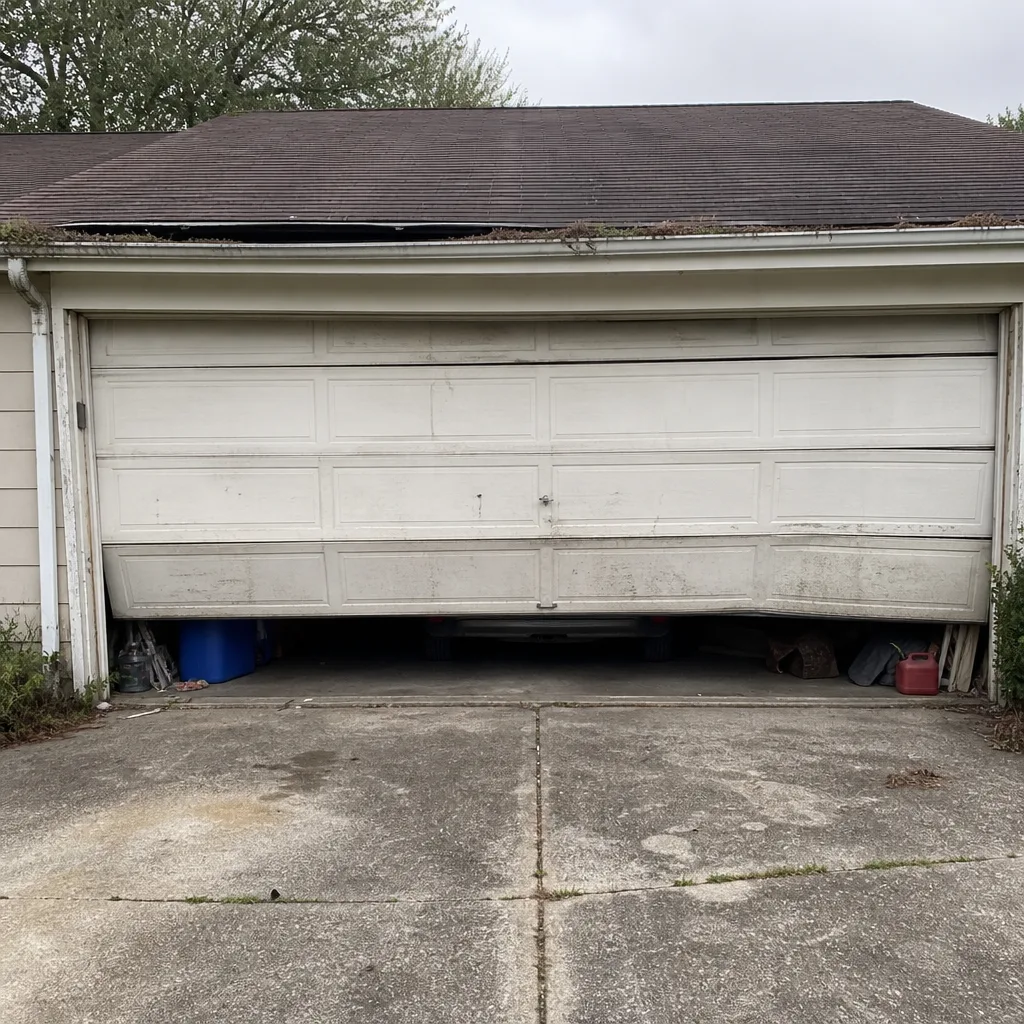 Before
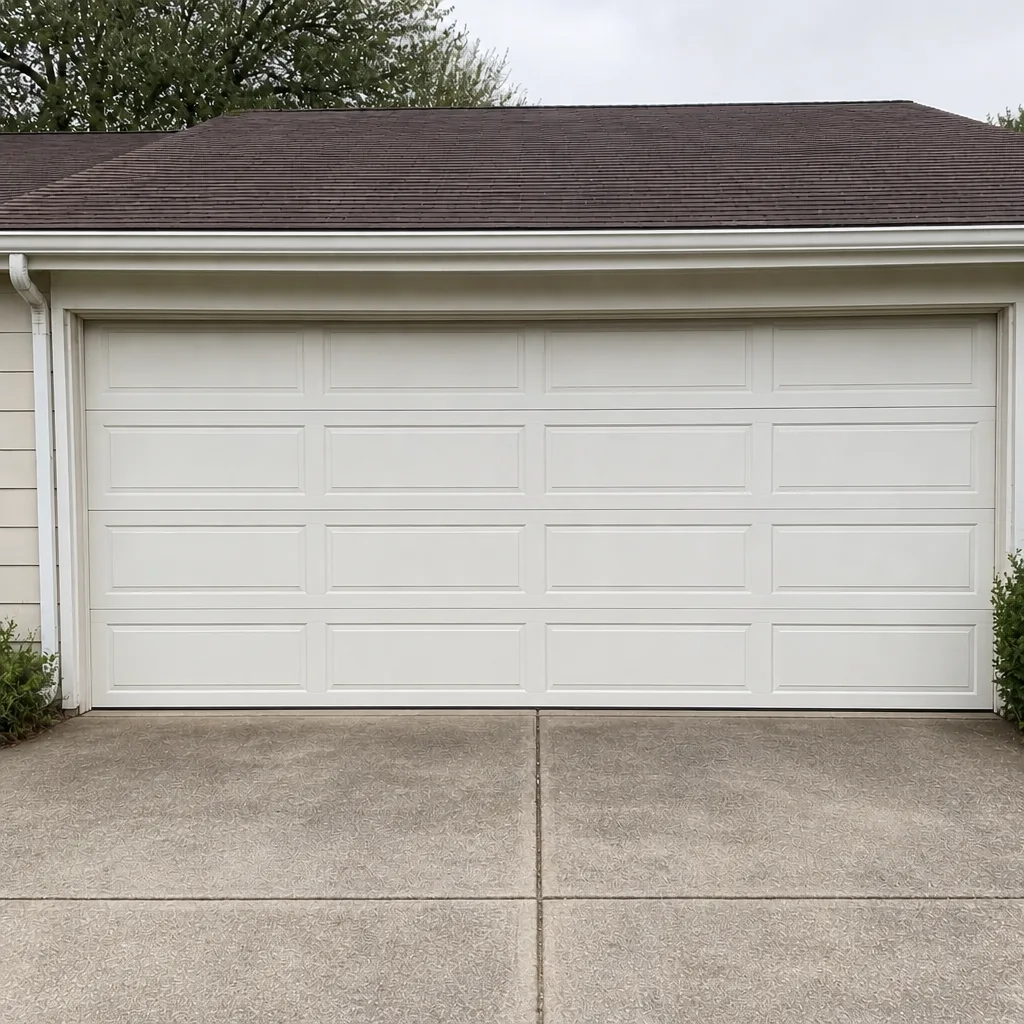 After
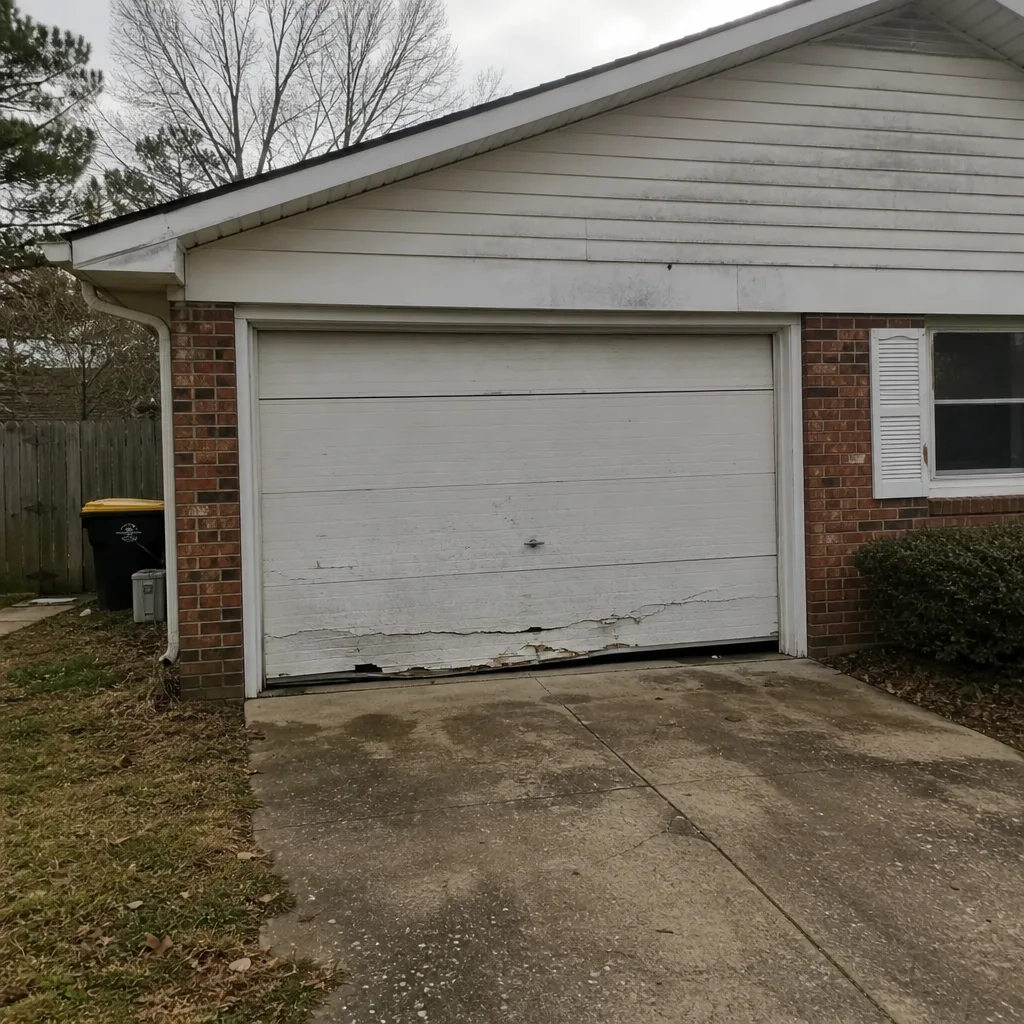 Before
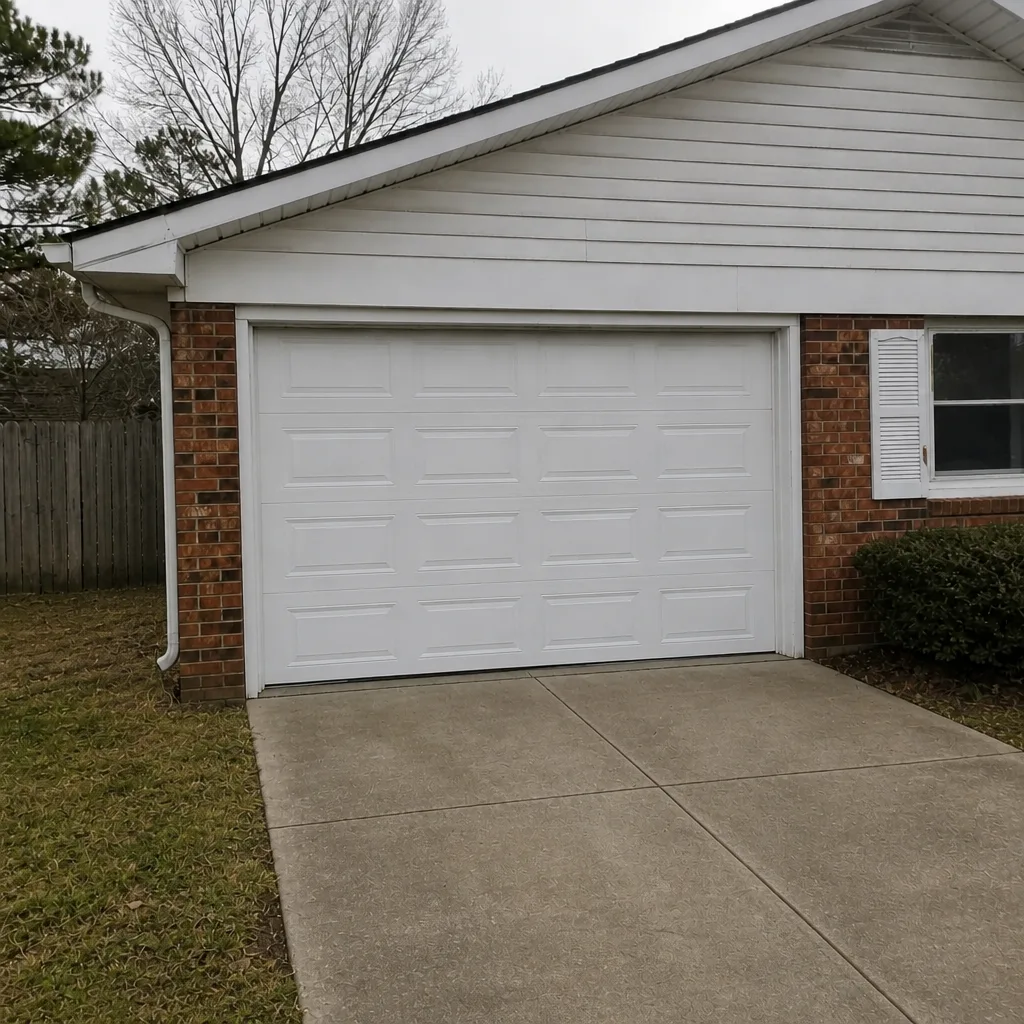 After
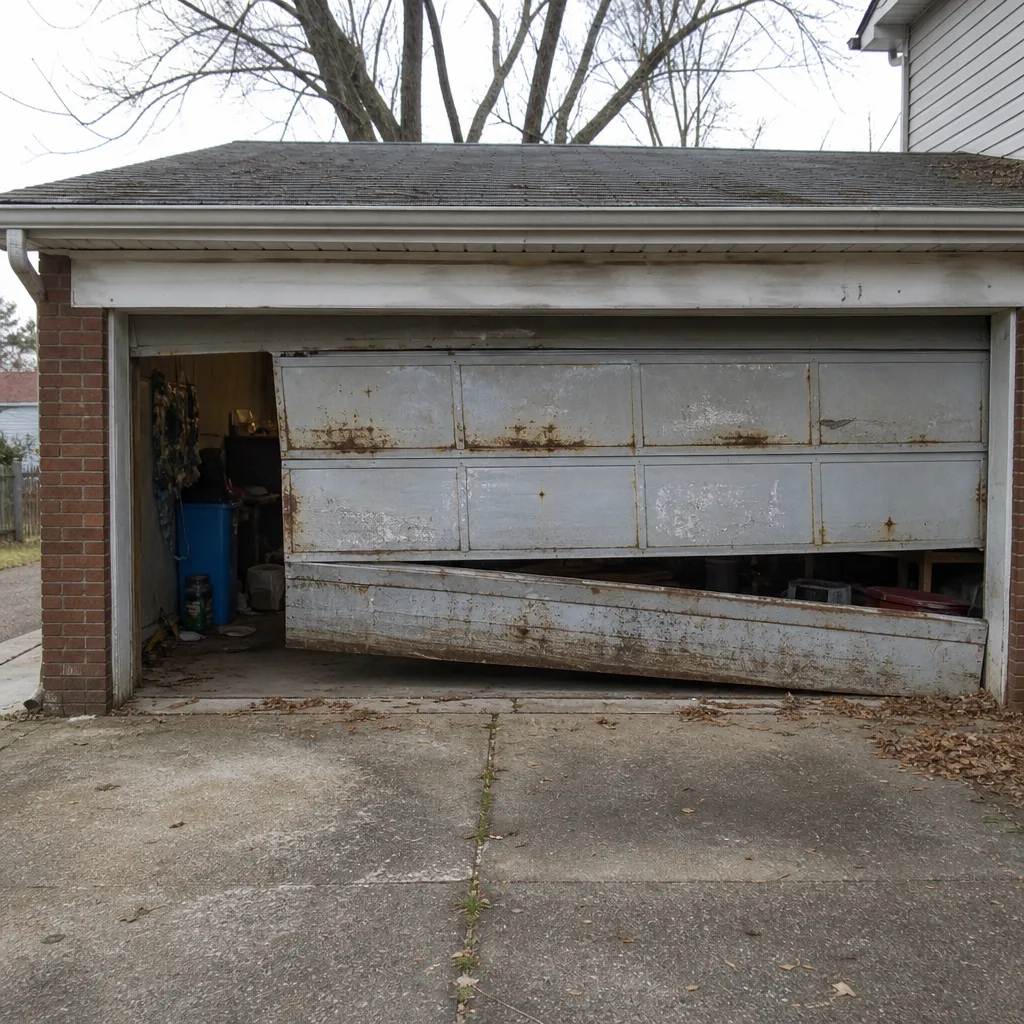 Before
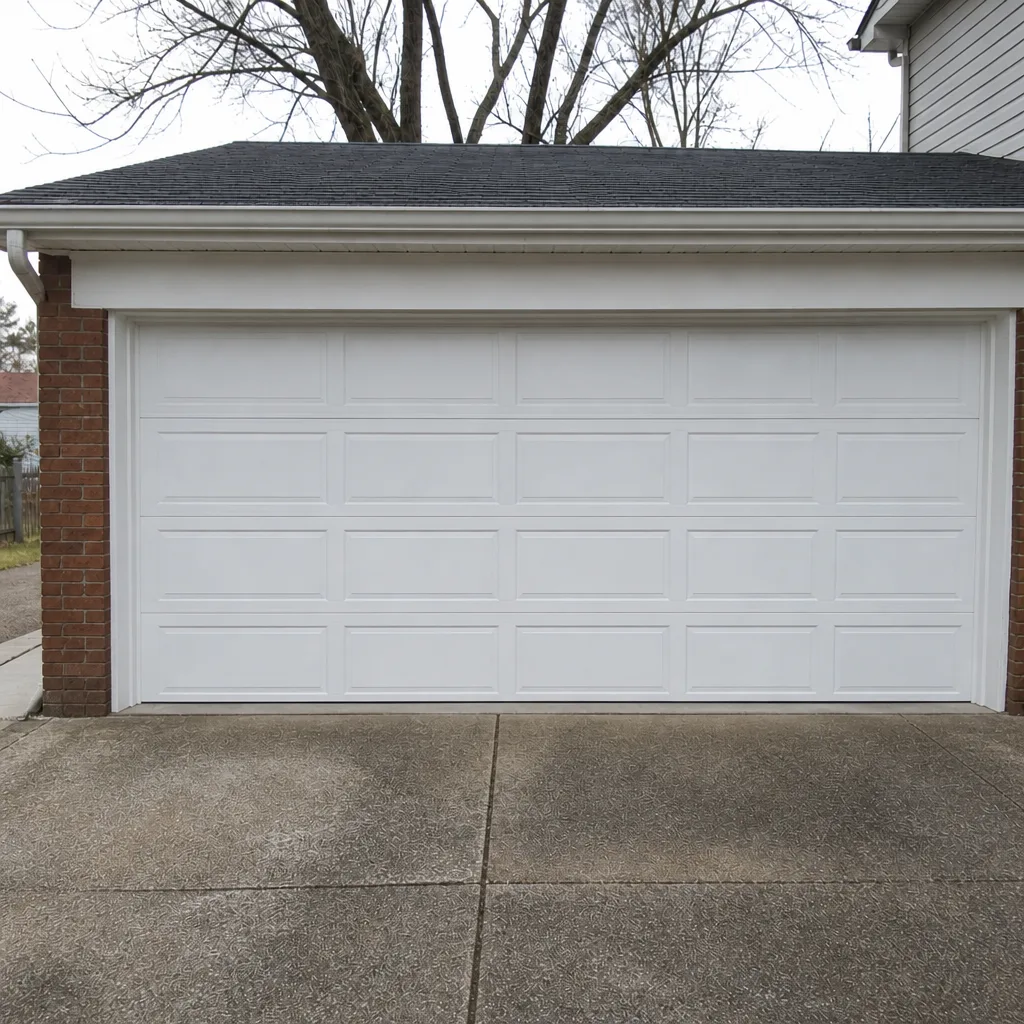 After
When to Call a Professional
Call a professional for any symptom in Tier 1 – a broken spring strand, a frayed cable, a door that falls rather than lowers, or an opener motor that keeps tripping thermal cutoff. These are the situations where continuing to use the door can cause injury or drop it. Call if the door reverses and the spring looks compromised in any way, or if the door won’t move and the 30-second cord test tells you the problem is in the door rather than the opener. Also call if you have a sagging door, a visibly misaligned track, or a bottom-seal gap you can see daylight under, especially in an attached garage. Garage Door Repair Green Run offers free estimates in Green Run – call (888) 260-6416 to get a straight answer on what you’re seeing.
Frequently Asked Questions
A door that reverses before reaching the floor, or one that sounds noisier and moves more jerkily than usual. Both are early warning signs that the door isn’t traveling smoothly, and the cause can be as simple as a sensor obstruction or as serious as a failing spring. The urgency depends entirely on which cause you’re looking at, which is why a quick phone diagnosis is worth doing before you keep using the door.
Not necessarily. A jerky door can mean a dirty track, a worn roller, or a spring that’s nearing the end of its cycle count. If the door is also heavy to lift by hand and the spring has a visible gap or rust bleed, the spring is the most likely cause and the door should stop being used. If the door is light and smooth by hand but jerky when the opener moves it, the problem is mechanical, not the spring.
Humidity can swell door sections, fog safety sensor lenses, and thin out lubricants. Each of these causes a symptom that looks like mechanical wear but resolves with a different fix. Clean the sensor lenses and check whether the reversing improves in dry weather. If it does, it’s seasonal humidity; if not, it’s mechanical and worth a service call.
Pull the emergency release cord and lift the door by hand. If it moves smoothly and stays where you leave it, the door is fine and the problem is the opener. If it’s heavy, binding, or slams back down, the problem is in the door (springs, cables, or tracks). This test takes about 30 seconds and tells you which half of the system to look at.
Surface rust alone isn’t an emergency, but heavy rust bleed combined with a door that’s suddenly heavy or won’t stay up is a sign the spring is compromised. High-tension springs can fail suddenly, and a broken spring strand is one of the few garage door failures that can cause injury. If you see both heavy rust and any change in the door’s weight, stop using the door and call for service.
The bottom seal is one of the few garage door parts most homeowners can replace themselves. It’s a rubber or vinyl strip that slides into an aluminum retainer, and replacing it is a reasonable afternoon project. That said, in an attached garage, a bottom-seal gap is a carbon monoxide path – if the gap is large, or if the retainer itself is bent or misaligned, it’s worth having it inspected rather than just re-seated.
The Bottom Line
Garage door warning signs are useful because they’re specific. The same jerky movement can point to four different causes with four different urgency levels, and the difference between “adjust it yourself” and “stop using the door” comes down to matching the symptom to the probable cause. Use the symptom-to-cause matrix above as a starting reference, and remember that in Green Run, humidity causes a whole class of symptoms that mimic mechanical wear but resolve with different fixes. Tier 1 signs – broken springs, frayed cables, doors that fall rather than lower – mean stop using the door. Tier 2 signs are worth a scheduled visit. If anything is unclear, call and describe what you’re seeing. That’s what the phone diagnosis is for.
We work on the brands already in your garage, from LiftMaster and Chamberlain openers to Clopay, Amarr, Genie, and Wayne Dalton doors, and we handle everything from a broken spring to a full new door. Call Garage Door Repair Green Run at (888) 260-6416 for a free estimate and a straight answer on what your door is telling you.
Written by the team at Garage Door Repair Green Run.